
The Tool Should Adapt to You

Alex Scott
Head of Operations

If you are taking a company into Japan, or you are already here and the market is not responding the way you expected, it is worth considering that the problem may not be your product. It may be that the market cannot form a consistent picture of who you are. And the way that picture gets formed just changed.
For most of the last two decades, adopting software meant adapting to it. A company picks a platform, then reshapes its workflows to match. Sales runs on one system, marketing on another, operations on a few more. Each tool arrives with its own logic, its own subscription, and a long list of features the team will never touch. The tools were built for a general market, so every company bends itself slightly out of shape to use them. Over time the software stops serving the operating model. It quietly becomes the operating model.
A tool built the other way around
Roy Husada, our CEO, recently showed me a Brand Operations console he had built, and what struck me was that it runs in the opposite direction.
The starting point was not “what software should we buy.” It was “what information do we actually need, what decisions are we trying to make, and how should our teams work together.” The tool was then built around those answers. That sounds like a small distinction. It is not. It reverses who adapts to whom.
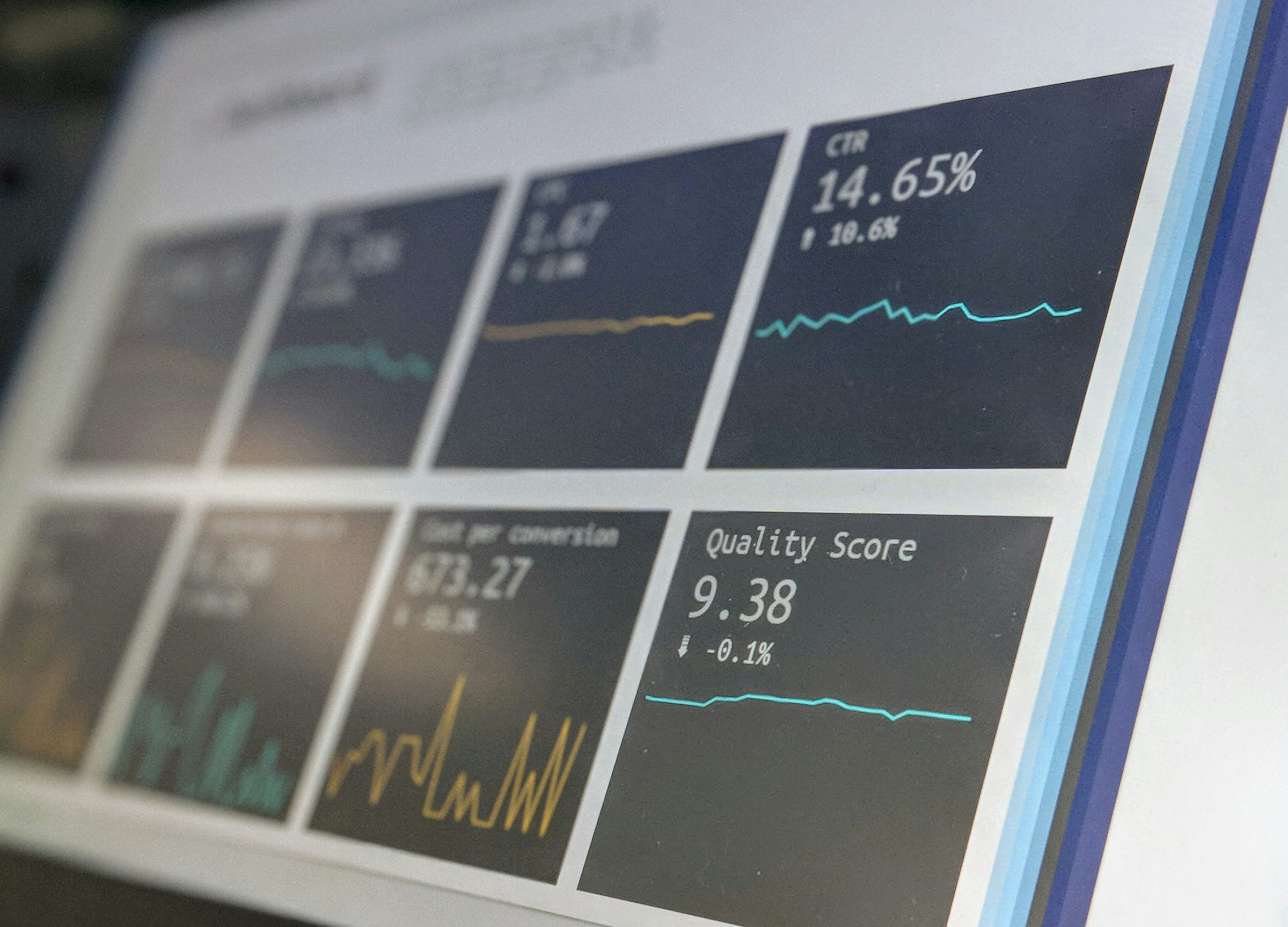
The console connects brand strategy with SEO, AEO, GEO and website performance. It helps a Head of Marketing see how the brand is being discovered, what questions people are asking, and where marketing strategy and technical execution have drifted apart. It does not replace Google Analytics. It plugs into it, so nobody is reinventing what already works.
What stood out was not the dashboard. It was the speed from information to decision. Within a few minutes I had 腹落ち, the point where a decision settles at gut level instead of staying an abstract number. I could see what a campaign needed to address, what the website had to explain, and how success could be measured in a specific market. In the past, that kind of insight arrived as a quarterly report built on global assumptions, and by the time it landed the market had usually moved.
The market just caught up
For a while this felt like an early observation. It is not early anymore.
Adobe has launched a product built entirely around AI visibility. Adobe LLM Optimizer, now generally available and expanded in 2026 into Adobe Brand Visibility, tracks how a brand appears across ChatGPT, Gemini, Perplexity and Google’s AI Overviews, then recommends how to improve it. Adobe’s own product leadership calls generative engine optimization a C-suite concern, not a marketing tactic. Around it, a category is consolidating. Established software vendors are acquiring the specialist startups, funding is moving in, and surveys of enterprise CMOs now show nearly every large company planning to increase spend on AEO and GEO this year.
A year ago this was a niche experiment. It has become a line item.
From searching to asking
The reason this is urgent has less to do with tooling and more to do with how people find things now. People are no longer only searching. They are asking questions, and AI systems synthesize the answer and decide which brands become part of it. Where someone used to open a search engine, scan a page of links and sort through the options, they now ask and receive a single packaged response. The AI does the sorting.
This lands harder in Japan than almost anywhere. AI systems working in the Japanese market read Japanese-language sources that a foreign head office often is not watching at all, from reviews and forums to employee posts and local coverage. They form a picture out of those sources. When a company’s global message and its Japan reality do not match, the AI does not smooth over the difference. It reflects it. That gap is where a lot of foreign brands lose trust before they have had a fair hearing.
Where this becomes Brand Operations
Here is the part most companies have not caught up to yet. An AI system does not read one source. It reads your global site, your local team’s posts, your reviews, your customer experience, and everything else it can find, then tries to form a coherent picture. If those sources contradict each other, the contradiction is what gets surfaced. A brand that says one thing publicly, something else through its people, and a third thing in practice cannot expect AI to resolve the gap in its favor.
Consistency is the point. A person who behaves one way with one group and a completely different way with another erodes trust the moment both sides compare notes. Brands work the same way. Consistency in what you deliver, how you communicate and the personality you show is what builds trust over time. In a two-language, two-market operation, that discipline is harder and it matters more.
That is why this is a Brand Operations problem, not only a content problem. Content creates the pathways through which trust is formed. Operational discipline keeps those pathways consistent as more people inside the company contribute to the brand, across teams and across languages. A visibility tool does not close that gap on its own. The tool tells you where you stand. The discipline is what keeps you standing there.
What we do not know yet
I want to be honest about the limits. Nobody has fully solved how a brand stays consistent across hundreds of AI systems that each describe it a little differently, and that problem gets harder, not easier, when the company operates in more than one language. It sits at the intersection of content quality and operational discipline, which is exactly where it is hard.
But the direction is clear. The next generation of business tools will not ask companies to conform to them. They will be built around how the company actually needs to work. And the brands that appear most often in AI answers will not be the ones producing the most content. They will be the ones sending the clearest and most consistent signals of trust.
Where Rare Standard comes in
This is what we do. We do not sell you a tool to adapt to. We build the one that adapts to you, around your market, your language and how your brand actually needs to work. We keep it current as the category moves, so staying on top of AI search is our job and not another thing on your plate. And we hold it to measurable outcomes rather than another subscription you barely use.
If you are entering Japan, or already here and the picture is not landing, that is the conversation to have.
The Tool Should Adapt to You
Alex Scott
Head of Operations
If you are taking a company into Japan, or you are already here and the market is not responding the way you expected, it is worth considering that the problem may not be your product. It may be that the market cannot form a consistent picture of who you are. And the way that picture gets formed just changed.
For most of the last two decades, adopting software meant adapting to it. A company picks a platform, then reshapes its workflows to match. Sales runs on one system, marketing on another, operations on a few more. Each tool arrives with its own logic, its own subscription, and a long list of features the team will never touch. The tools were built for a general market, so every company bends itself slightly out of shape to use them. Over time the software stops serving the operating model. It quietly becomes the operating model.
A tool built the other way around
Roy Husada, our CEO, recently showed me a Brand Operations console he had built, and what struck me was that it runs in the opposite direction.
The starting point was not “what software should we buy.” It was “what information do we actually need, what decisions are we trying to make, and how should our teams work together.” The tool was then built around those answers. That sounds like a small distinction. It is not. It reverses who adapts to whom.
The console connects brand strategy with SEO, AEO, GEO and website performance. It helps a Head of Marketing see how the brand is being discovered, what questions people are asking, and where marketing strategy and technical execution have drifted apart. It does not replace Google Analytics. It plugs into it, so nobody is reinventing what already works.
What stood out was not the dashboard. It was the speed from information to decision. Within a few minutes I had 腹落ち, the point where a decision settles at gut level instead of staying an abstract number. I could see what a campaign needed to address, what the website had to explain, and how success could be measured in a specific market. In the past, that kind of insight arrived as a quarterly report built on global assumptions, and by the time it landed the market had usually moved.
The market just caught up
For a while this felt like an early observation. It is not early anymore.
Adobe has launched a product built entirely around AI visibility. Adobe LLM Optimizer, now generally available and expanded in 2026 into Adobe Brand Visibility, tracks how a brand appears across ChatGPT, Gemini, Perplexity and Google’s AI Overviews, then recommends how to improve it. Adobe’s own product leadership calls generative engine optimization a C-suite concern, not a marketing tactic. Around it, a category is consolidating. Established software vendors are acquiring the specialist startups, funding is moving in, and surveys of enterprise CMOs now show nearly every large company planning to increase spend on AEO and GEO this year.
A year ago this was a niche experiment. It has become a line item.
From searching to asking
The reason this is urgent has less to do with tooling and more to do with how people find things now. People are no longer only searching. They are asking questions, and AI systems synthesize the answer and decide which brands become part of it. Where someone used to open a search engine, scan a page of links and sort through the options, they now ask and receive a single packaged response. The AI does the sorting.
This lands harder in Japan than almost anywhere. AI systems working in the Japanese market read Japanese-language sources that a foreign head office often is not watching at all, from reviews and forums to employee posts and local coverage. They form a picture out of those sources. When a company’s global message and its Japan reality do not match, the AI does not smooth over the difference. It reflects it. That gap is where a lot of foreign brands lose trust before they have had a fair hearing.
Where this becomes Brand Operations
Here is the part most companies have not caught up to yet. An AI system does not read one source. It reads your global site, your local team’s posts, your reviews, your customer experience, and everything else it can find, then tries to form a coherent picture. If those sources contradict each other, the contradiction is what gets surfaced. A brand that says one thing publicly, something else through its people, and a third thing in practice cannot expect AI to resolve the gap in its favor.
Consistency is the point. A person who behaves one way with one group and a completely different way with another erodes trust the moment both sides compare notes. Brands work the same way. Consistency in what you deliver, how you communicate and the personality you show is what builds trust over time. In a two-language, two-market operation, that discipline is harder and it matters more.
That is why this is a Brand Operations problem, not only a content problem. Content creates the pathways through which trust is formed. Operational discipline keeps those pathways consistent as more people inside the company contribute to the brand, across teams and across languages. A visibility tool does not close that gap on its own. The tool tells you where you stand. The discipline is what keeps you standing there.
What we do not know yet
I want to be honest about the limits. Nobody has fully solved how a brand stays consistent across hundreds of AI systems that each describe it a little differently, and that problem gets harder, not easier, when the company operates in more than one language. It sits at the intersection of content quality and operational discipline, which is exactly where it is hard.
But the direction is clear. The next generation of business tools will not ask companies to conform to them. They will be built around how the company actually needs to work. And the brands that appear most often in AI answers will not be the ones producing the most content. They will be the ones sending the clearest and most consistent signals of trust.
Where Rare Standard comes in
This is what we do. We do not sell you a tool to adapt to. We build the one that adapts to you, around your market, your language and how your brand actually needs to work. We keep it current as the category moves, so staying on top of AI search is our job and not another thing on your plate. And we hold it to measurable outcomes rather than another subscription you barely use.
If you are entering Japan, or already here and the picture is not landing, that is the conversation to have.